

Dr. Susan Rudolph has worked in many corners of correctional and forensic psychology. Starting as a junior correctional officer, she eventually returned to graduate school, where she received training to pursue future roles as a correctional psychologist in several institutions, a forensic psychologist through her own private practice, and most recently taking on an administrative role in the United States Federal Bureau of Prisons. With her extensive background in corrections, she was able to sit down with me and provide some unique and important perspectives on staff wellness in correctional environments, from both a personal and a supervisory perspective. We began by discussing how … [Read more...] about Interview: Dr. Susan Rudolph on Not Just Caring for Your Clients, But for Your Colleagues and Yourself, in a High Stress Environment
Turning a New Page Together

Although Cherie introduced me in the beginning of this bulletin, I wanted to also introduce myself. My name is Tia Tourville. I am an advocate for quality mental health treatment in the criminal justice system. My research interests include competence to stand trial and the effects of pretrial detention on mental health. I pride myself on being a teacher and a mentor, and hope to uphold those roles, regardless of where my career takes me. Perhaps most importantly, I absolutely love to learn (and not just in school, which my family jokes I will never stop returning to). I enjoy learning fun facts, playing trivia, reading about myths and legends, and listening to podcasts. I love discovering … [Read more...] about Turning a New Page Together
Summary: Correctional Officers with More Service Time Are More Likely to Experience Persistent Mental Health Problems

The most recent issue of Criminal Justice and Behavior (Volume 59, Issue 9, September 2025) has published an article by Samantha L. Allen and Joseph A. Schwartz detailing a longitudinal study examining the prevalence and persistence of significant mental health concerns in correctional officers in relation to service time. The findings of this study provide important perspectives for leadership in correctional settings when considering mental health and wellness of themselves and their staff. Background Despite recent increases in state prison populations, the number of state correctional employees in the United States has continued to decline over the years. Employee shortages have … [Read more...] about Summary: Correctional Officers with More Service Time Are More Likely to Experience Persistent Mental Health Problems
Addressing Burnout in the Irish Prison Service: Exploring the Experiences of Psychology Staff

Psychologists are particularly vulnerable to occupational stress and burnout (Dattilio, 2015; Rupert et al., 2015) due to the emotionally demanding and people-centred nature of their role. Research highlights that the prevalence of burnout in Psychology can be high, and that susceptibility to burnout may occur even before qualification (Kaeding et al., 2017). These risks are heightened in correctional and forensic settings, where professionals are required to manage complex interpersonal dynamics and often heavy workloads (Dolan et al., 2022) and repeated contact with trauma, including disclosures of death, abuses and injury from their clients. With this “Cost to Caring” in mind, the Irish … [Read more...] about Addressing Burnout in the Irish Prison Service: Exploring the Experiences of Psychology Staff
Foreword from Cherie Townsend, IACFP Executive Director

Since the last IACFP Bulletin, we have lost two great leaders who were dedicated to improving correctional practices and rehabilitation outcomes globally: Peter Severin and Dr. Helen Farley. As we begin this new issue, which is focused on staff well-being, it is appropriate to first acknowledge our connections with Peter and Helen and their contributions to our profession. In August, we received the news from the International Corrections and Prisons Association (ICPA) that its President, Peter Severin, had passed away on Sunday, August 17, 2025. This followed a sudden and devastating illness. Peter, who had retired as Commissioner for Correctional Services in New South Wales in 2021 … [Read more...] about Foreword from Cherie Townsend, IACFP Executive Director
Summary: “Knowing and Working with Someone Who Has Made It Means I’m Going to Make it Too”: Experiential Knowledge as a Catalyst for Transformation in Reentry and Beyond

A recent issue of Criminal Justice and Behavior (Volume 52, Issue 2) features a new study by Emily I. Troshynski, Carolyn Willis, and Kara Forrai that examines the effectiveness of social reentry programs with staff who have experiential knowledge of being justice-involved individuals. The study adopted a qualitative approach, interviewing and analyzing responses from formerly incarcerated people to learn how their interactions with peers and mentors who had similar life experiences worked to reduce the likelihood of recidivism. The study was underwritten by a Second Chance Act (SCA) Grant from the United States Department of Justice (DOJ), which offers federal funds to advance efforts … [Read more...] about Summary: “Knowing and Working with Someone Who Has Made It Means I’m Going to Make it Too”: Experiential Knowledge as a Catalyst for Transformation in Reentry and Beyond
National Commission on Correctional Healthcare: Report on Spring Conference Louisville Kentucky April 5th-8th 2025
In April of this year, I was lucky enough to travel to Louisville, Kentucky, USA with two healthcare colleagues to attend the National Commission on Correctional Healthcare (NCCHC) Spring Conference 2025. This was on foot of Caron McCaffrey (Director General of the Irish Prison Service) challenging me and my team to seek out more solutions to the healthcare challenges we face in corrections, with a particular emphasis on reviewing what is happening in other jurisdictions. Scrolling LinkedIn one evening in Dublin, I came across the NCCHC Spring Conference in Kentucky. The itinerary was broad, relevant, and looked really interesting. Our Director General agreed to three of us travelling, … [Read more...] about National Commission on Correctional Healthcare: Report on Spring Conference Louisville Kentucky April 5th-8th 2025
The Growth Standards: Creating Blueprints for Cultural Change
Justice 2.0 is a campaign that calls for an upgrade to the justice system, globally. At the forefront of this campaign is culture change, acknowledging the harms associated with unhealthy and toxic cultures, and proposing that communities (including practitioners and those in contact with the system) deserve better. Justice 2.0 is co-owned by any individual or organisation that wants cultural change. It encourages people to explore what they would like as an upgrade within the justice system. Grow Transform Belong CIC (GTB) is leading the way through its core strategy, which has three key elements: Firstly, GTB provides resources and online learning opportunities and courses to … [Read more...] about The Growth Standards: Creating Blueprints for Cultural Change
IACFP International News, Research, and Resources for May/Jun 2025

IACFP IACFP supports correctional and forensic psychologists, as well as other helping professionals working with justice-impacted individuals. We aim to advance evidence- and practitioner-informed policies and practices, and to elevate psychology’s role in correctional settings. For 2025–2031 we have adopted three pillars as the Association’s strategic focus: Helping the Helpers: IACFP is dedicated to advancing the voice of psychology in corrections through supporting psychologists and other helping professionals. The focus of this support is opportunities for connection with colleagues globally and learning through Continuous Professional Development. Research to … [Read more...] about IACFP International News, Research, and Resources for May/Jun 2025
Foreword from Jessica Borg
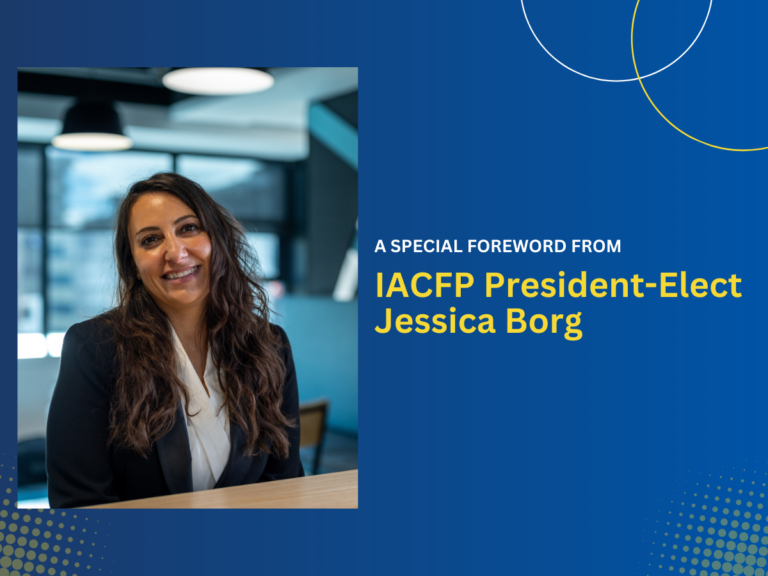
Kia ora and Hello! I was delighted to be nominated as President-Elect of the International Association for Correctional and Forensic Psychology (IACFP) and started in the role in January 2025 together with Dr Emma Regan who commenced as our President at the same time. It is truly rewarding to be working alongside my colleagues on the Board. We bring a range of diverse backgrounds, professional experience, and skills that serve to strengthen our pursuit of the objectives set in our strategy. A little about me – I am originally from the small island of Malta in the Mediterranean where I completed my BA in Psychology (Honours). I was awarded a scholarship from the European Union for an MA … [Read more...] about Foreword from Jessica Borg
Summary: The Intersection of Juvenile Psychopathy, Protective Factors, Treatment Change, and Diversity in Justice-Involved Youth
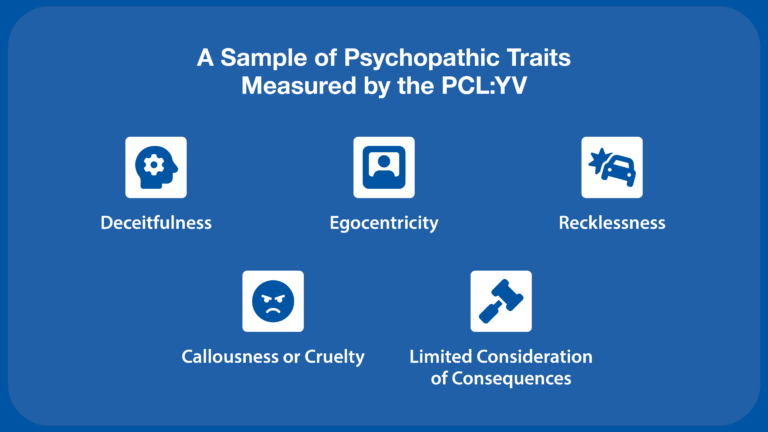
The 50th anniversary issue of Criminal Justice and Behavior (Vol. 52, Issue 3, March 2025) has published a new study co-authored by Kristine M. Lovatt, Keira C. Stockdale, and Mark Olver that examines how protective factors, dynamic violence risk, and recidivism intersect with cases of juvenile psychopathy. Through a comparative analysis of different measuring tools and official records, the researchers looked at a diverse sample of Canadian justice-involved youth to see how psychopathic traits corresponded with criminal risk and recidivism. The study found that while juvenile psychopathy remained clinically relevant, the construct did not seem to be connected to a lack of protective factors … [Read more...] about Summary: The Intersection of Juvenile Psychopathy, Protective Factors, Treatment Change, and Diversity in Justice-Involved Youth
Summary: Where Should We Intervene, 20 Years Later? – Case–Control and Prospective Cohort Designs Provide Similar Answers
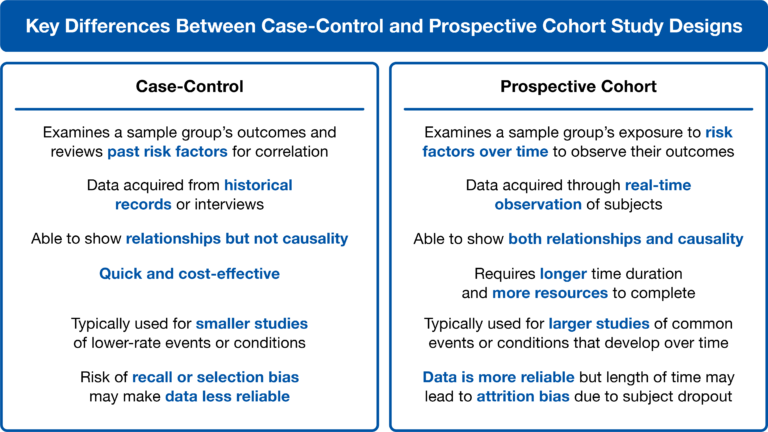
The 50th anniversary issue of Criminal Justice and Behavior Vol. 52, Issue 3, March 2025) has published a new study by Julie Blais, R. Karl Hanson, and Andrew J.R. Harris that revisits a 2000 case-control study of risk factors for sexual recidivism (Hanson & Harris), also originally published in CJB. By examining updated information on the original sample subjects collected in 2017, the researchers were able to further compare those who re-offended and those who did not by differentiating the risk factors observed in the original case-control study and those in the new prospective cohort model. While most of the comparisons favored the prospective cohort study design, the researchers … [Read more...] about Summary: Where Should We Intervene, 20 Years Later? – Case–Control and Prospective Cohort Designs Provide Similar Answers