
Dr. Susan Rudolph has worked in many corners of correctional and forensic psychology. Starting as a junior correctional officer, she eventually returned to graduate school, where she received training to pursue future roles as a correctional psychologist in several institutions, a forensic psychologist through her own private practice, and most recently taking on an administrative role in the United States Federal Bureau of Prisons. With her extensive background in corrections, she was able to sit down with me and provide some unique and important perspectives on staff wellness in correctional environments, from both a personal and a supervisory perspective.
We began by discussing how staff wellness is perceived and discussed in correctional environments. Likely to few readers’ surprise, staff wellness, whether physical, mental, or emotional, is typically not viewed through a very serious lens. Even amongst specialty or executive staff (e.g., psychologists, wardens, etc.), it is not uncommon to hear correctional staff brush off or joke about their wellbeing. Unhealthy, and sometimes dangerous, coping strategies are frequent in law enforcement roles generally, but especially in custody (e.g., drinking, etc.). Dr. Rudolph emphasized how the significant and potentially traumatic events experienced by law enforcement can be particularly difficult to cope with in a locked down environment like corrections. Correctional psychologists, and other specialty staff, also have unique dual roles as correctional officers, experiencing similar occupational stressors while also being less likely to openly discuss their own health and safety. In addition to witnessing or experiencing violent or other traumatic situations, being literally locked in to such a high stress environment can further impact staff wellness. Some research suggests that correctional officers can have similar responses to their working environment that military personnel have when in combat.
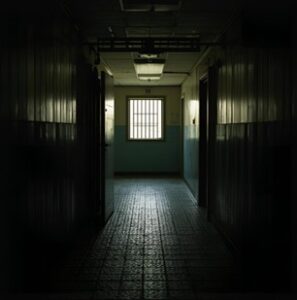
Mirroring a small, self-sufficient city, the public seems to forget about those working inside, despite the fact that the institutions could not run without them. The public does not see correctional officers walking down their street in uniform or responding to emergencies. When correctional staff make the news, it is more often for negative things, despite many positive things happening behind institution walls. To further exemplify this idea, when looking for and creating images to fit into this article, nearly everything available looked like the image I have included here. Dark, dirty, hollow. Forgotten. The epitome of public perceptions of corrections. When a police officer dies in the line of duty, there are public memorials and social media posts. When a correctional officer dies in the line of duty, there is little publicity outside of their assigned institution. Correctional officers are also at highest risk of dying by suicide compared to any other law enforcement role. Dr. Rudolph and her staff have lost colleagues, supervisors, and even family members. The difficulties of working in corrections are not only tied to the institutions in which we work. Thus, it is essential that we no longer ignore or brush off our colleagues’ or our own wellbeing.
Correctional agencies do appear to be making attempts to normalize conversations about staff wellness, with some holding wellness campaigns and events to teach, encourage, and practice wellness activities. However, Dr. Rudolph discussed concerns that many staff, particularly psychology staff, do not seem interested or motivated to participate. Correctional staff are too busy, don’t want to acknowledge their experiences, or do not believe such resources to be helpful. She discussed a particular resistance from mental health staff, as if having a background of psychological training may make people (herself included) feel like acknowledging a need for help is like admitting to weakness. This led us to discuss how to encourage staff to talk about their mental wellbeing and increase willingness to seek help when needed.
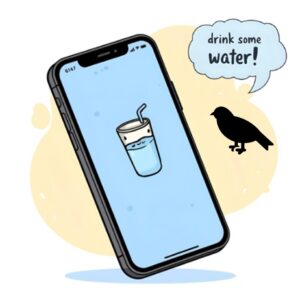
One perspective Dr. Rudolph was particularly passionate about was encouraging staff to start small. It can be particularly intimidating or overwhelming for someone to acknowledge that they are struggling and to feel as though they must fix it right away. We discussed how each person may respond to something different. It could be taking a walk in nature, going to church, or joining some team, group, or community outside of work. She discussed her own experience using a self-care phone app and how much of an impact it has had on her wellbeing. Simple reminders like taking a deep breath and drinking water have been instrumental in Dr. Rudolph building up to a larger self-care routine. She now practices breathing and visualization activities almost daily, but she acknowledged that it did not start that way. She has found that taking care of herself has drastically improved her ability to care for those around her, both clients and colleagues included. Dr. Rudolph was beaming as she told me about how many staff she has recommended the app to and how many use it regularly. Starting with small tasks that take only a few seconds or a few minutes are much easier to try than those that take an hour or multiple hours, days, or weeks.
There is no single solution for changing the dynamics of an entire system. Some readers of this article may be inclined to think that psychology staff are responsible for monitoring the wellbeing of their colleagues. However, this is not an appropriate role for correctional psychologists. Although it may be important to check in on those around you, professional boundaries prevent psychology staff from becoming too involved, except in crisis situations. After some thought and discussion, Dr. Rudolph emphasized that the most successful approach to encouraging discussions about mental wellbeing is to normalize the topics. Dr. Rudolph sees that her custody staff are more supportive of mental health resources when they see their non-psychology colleagues or supervisors accepting and utilizing them.
Although Dr. Rudolph has experience as a junior correctional officer, her colleagues have trouble seeing past her “Dr.” prefix, despite not currently working in a psychologist role. None of the staff she currently works with knew her when she was a correctional officer. Thus, she takes every opportunity she can to step in to help officers in their regular job duties, allowing herself and her colleagues to see each other as being on the same team. She has found that respect appears to be the most powerful connection. Mutual respect, especially from leadership, is essential in building trust with correctional staff and is equally important in both maintaining new staff and supporting staff that have a whole career under their belt.
At the end of our discussion, I asked Dr. Rudolph what advice she would give new psychologists considering a career in corrections. Her immediate response was,
“You have to love what you do.”
Correctional institutions can be difficult to work in. Not everyone will be comfortable working in a place where the door locks behind you and you must rely on someone else to let you leave. And that is okay. She recommends any psychologist considering corrections to visit a facility first, to really get a feel for the environment. She encourages correctional psychologists to keep up with what is going on outside of the institutions. Attend trainings, read research, continue to learn. Bring that information to your supervisors and your colleagues. It can be easy to fall into a rhythm and get stuck in what you have always been doing.
Despite the noise and the chaos, Dr. Rudolph loves that no two days are the same. She and those around her are responsible for the lives of others. She loves making corrections a better place, both for her staff and for those incarcerated. Dr. Rudolph’s final recommendations for those working in corrections were to create a life outside of the institution in which you work and to keep on talking. Find things you enjoy. Get closer to people who can pull you back when you feel yourself falling apart. Encourage your friends and family to say something if they notice you are not doing well. And finally, keep talking, keep checking in, and keep taking care of yourself.
Tia Tourville, IACFP Communications and Projects Contractor