
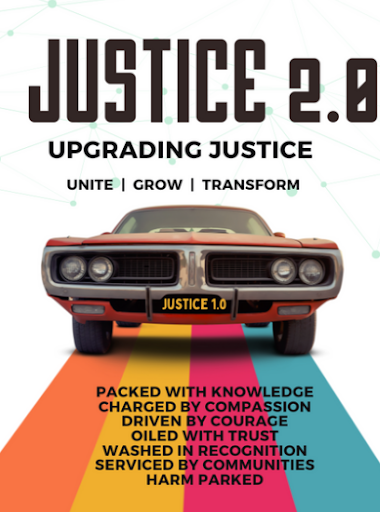
 Justice 2.0 is a campaign that calls for an upgrade to the justice system, globally. At the forefront of this campaign is culture change, acknowledging the harms associated with unhealthy and toxic cultures, and proposing that communities (including practitioners and those in contact with the system) deserve better.
Justice 2.0 is co-owned by any individual or organisation that wants cultural change. It encourages people to explore what they would like as an upgrade within the justice system. Grow Transform Belong CIC (GTB) is leading the way through its core strategy, which has three key elements:
- Firstly, GTB provides resources and online learning opportunities and courses to support practitioners, managers, and leaders to learn how to change culture (gtbacademy.talentlms.com).
- Secondly, GTB aims to provide practical blueprints to capture quality practice and guide organisations through the process of culture change and raise awareness of how culture change can take place meaningfully and sustainably.
- Finally, GTB aims to promote a sense of community through collective impact, encouraging organisations to co-define their own upgrades and visions and co-own Justice 2.0, focusing on their strengths and ambitions.
 There was also a strong desire from the lived-experience community to not just contribute towards support services but to grow into professionals and leaders. The Standards highlighted ways in which organisations can address this and signposted resources, which could support the journey to professionalism.
The findings also highlighted how a strong sense of purpose provided resilience against the emotional tolls that people experienced within the justice system. Some reported the healing nature of this work and how it provided them a sense of self-worth. The Standards provide practical ways in which organisations can harness these positive outcomes and address times at which people with lived experience felt disempowered and isolated.
Growth in Action
These Standards are not created in isolation. They are deeply embedded in the wider Growth Philosophy, which centres on creating relational environments, founded on trust, belonging, and hope. The Growth Standards translate these principles into tangible practice. They value human potential over past mistakes and they place relationships at the heart of cultural change.
Following the recommendations, the Standards provide guidance to help organisations assess their current culture and provide case studies and resources that aim to inspire those with an appetite for cultural development. The self-assessment tool evaluates whether an organisation is aware of the importance of the Standards, is acting on them or has fully embedded the Standards in practice to the point at which they are leading within this approach.
An online questionnaire has been integrated into the Growth Standards to help organisations understand where they are and how they might grow into an organisation with a more inclusive culture. The assessment is not a tick-box exercise. It helps engage in reflection, honesty, and growth, focusing on the “how” as well as the “what.” The tool guides organisations through questions of leadership, inclusion, trauma-awareness, and meaningful participation, and provides an action plan template with examples to help organisations grow.
Beyond the Standards
The ultimate vision is that one day, these Standards will no longer be necessary — that lived experience will be fully embedded in the justice system and new cultural norms emerge as part of the Justice 2.0 upgrade. The Standards focus on collective responsibility and ownership, building opportunities for organisations to develop but also seek advice from those that designed the Standards. To date, 13 global organisations have endorsed the Standards and promoted their commitment to the journey ahead.
If you would like to endorse these Standards, please contact Sarah at Sarah@growtransformbelong.com.
For a copy of the full Standards, please visit: https://www.growtransformbelong.com/justice2-0/