
The months around December are considered the “Holiday Season” in many countries across the world. Although often perceived as a happy or celebratory time, the holidays can be particularly difficult for many people, especially those who are incarcerated. The holidays can spark feelings of loneliness, anxiety, or regret when people are separated from their family. On the other hand, reminders of family and past experiences can incite stress for those who have experienced adverse or traumatic life events. Family visits may be limited during this time (either due to reduced staffing or unavailability of family members). People in recovery from substance or alcohol abuse are at increased risk of relapsing, whether in prison or in the community. People may long for family or friends they have lost.
Correctional staff can experience similar stressors, particularly those in custody roles, as prisons and jails do not close for holidays. Although many institutions try to rotate staff coverage, many staff do not have much choice or flexibility in their schedules around this time. Correctional staff are also affected by reduced staffing or holiday-related emotional stressors. Some research suggests that law enforcement personnel are at increased risk of suicide around or immediately after the holidays (Eser, 2025). Thus, it is an important time to practice compassion and provide support for our clients, our colleagues, and ourselves. If you or a friend are struggling with the holidays, experiencing suicidal thoughts or other emotional or psychological distress, please utilize (or share) these international resources:
- OpenCounseling a comprehensive list of international emergency and suicide hotlines: https://blog.opencounseling.com/suicide-hotlines/
- Befrienders Worldwide provides access to mental health and emotional support helplines, websites, and centers across the globe: https://befrienders.org/
- International Association for Suicide Prevention also provides resources and has a database of crisis lines, depending on which country you reside: https://www.iasp.info/contact/
Despite some difficulties, the holiday season provides ample opportunity to celebrate good things. Many rehabilitative programs will schedule specialized events or groups catered to the holiday season to negate emotional stressors and foster a sense of community for incarcerated people. Correctional staff who do work may receive holiday pay or other benefits provided by leadership. It may be beneficial to better understand some holiday traditions to relate to clients or colleagues, or to simply learn more about celebrations across the world. Some holidays are celebrated nearly globally, while others depend on physical location, religious affiliation, or cultural values. Described below are some of the most celebrated holidays that occur in December, paired with traditions and celebrations that accompany such.
Celebrations Across the World
St. Nicholas Day – December 6th (Western Europe) & December 19th (Eastern Europe)
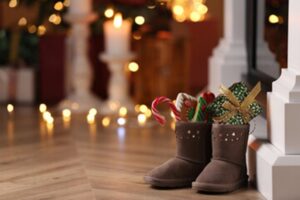 Also known as the Feast of Saint Nicholas, St. Nicholas Day celebrates a 4th century bishop, Saint Nicholas, who is known for his generosity and gift-giving. Although some compare this event to Christmas, it is considered a distinct holiday or a “prelude” to Christmas celebrations, where children leave their shoes or boots by windows and doors the night before and receive small gifts in them on St. Nicholas Day. Treats often include small chocolate coins, cookies, or Saint Nicholas-shaped treats. In the Netherlands and Belgium, children place their shoes by the fireplace and provide carrots for Saint Nicholas’s horse. In Germany and Austria, Saint Nicholas is accompanied by Krampus (Krampusnacht), a play on a “naughty or nice” dynamic in which the former provides gifts to good children, while the latter allocates punishments to bad children. Cities in France host parades and share Saint Nicholas-shaped baked goods. In more Eastern cultures, like Ukraine, the holiday takes place later in the month. With a more religious focus, many attend church services and emphasize it as the primary holiday, rather than a compliment to Christmas.
Bodhi Day – December 8th & January (Japan, China, Korea, & Vietnam)
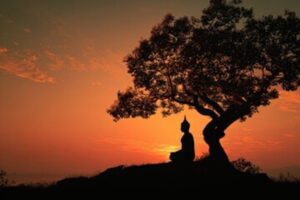 Bodhi Day is a celebration of the day of enlightenment of the Buddha after a significant period of meditation under the Bodhi Tree. Although often celebrated on December 8th (e.g., Japan), some Asian countries celebrate on the 8th day of the 12th lunar month, which can vary year to year, oftentimes falling in January. Those celebrating often take time to reflect on Buddha’s teachings, including the Four Noble Truths, which describe the nature, cause, cessation, and the path to cessation of suffering. Celebrations often include lamp-lighting ceremonies, decoration of Bodhi trees, and communal acts of kindness. Some read religious texts or scriptures, eat sacred meals of rice and milk, or meditate. Bodhi Day highlights self-reflection and spiritual renewal, with those celebrating reemphasizing their commitment to Buddhist principles, such as compassion and kindness.
St. Lucia’s Day – December 13th (Scandinavia & Italy)
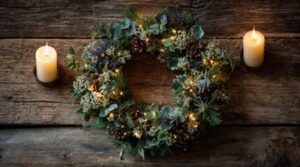 St. Lucia’s Day is a celebration of the Christian martyr, Saint Lucia of Syracuse, as well as a symbol for the start of the Christmas season. This holiday is also known as the Festival of Lights, as Saint Lucia is often portrayed wearing a crown of candles, to represent how she was able to bring food to other Christians who hid in the catacombs when Christianity was outlawed in the Roman Empire. Communities will often engage in a processional, in which a young girl, dressed as Saint Lucia with a crown of candles, walks through a town square, church, or other significant area. Others follow Saint Lucia, carrying candles and singing songs. People celebrate by sharing lussekatter (saffron buns with raisins) and glögg (mulled wine) and perceive the holiday as a celebration of light over dark, especially in reference to the start of long northern winters.
Hanukkah – December 18th to 26th (Israel & Global Jewish Communities)
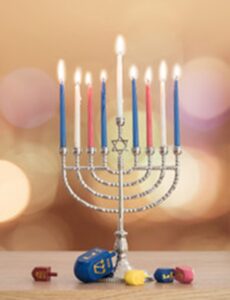 Also known as the Festival of Lights, or Chanukah, Hanukkah is an 8-night celebration of the rededication of the Second Temple in Jerusalem, Israel following a period of tension and conflict with Syria. Per legend, when Jewish leaders of the resistance reentered the Temple, they only had enough oil to light the Eternal Light, which had burned constantly at the Temple before its overtaking, for one day. However, unexpectedly, the oil burned for 8 nights. Thus, Jewish communities celebrate for 8 nights to represent each day the oil continued to burn, exchanging gifts, games, prayers, and food cooked in oil. A menorah, holding a candle for each night, plus a 9th to assist with lighting, is typically displayed in a window, where families circle around, praying for each night’s candle ceremony.
Winter Solstice – December 21st or 22nd (Northern Hemisphere)
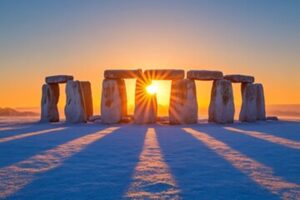 The Winter Solstice represents the shortest day and the longest night of the year, occurring in December in the Northern Hemisphere and in July in the Southern Hemisphere. Many see this day as a time for reflection and renewal, as the season “resets” and days start to become longer. The Winter Solstice has been celebrated for millennia, influencing the development of many ancient structures. Newgrange in Ireland and Cahokia Woodhenge in Illinois, United States were designed to align with the Winter Solstice sunrise, while Stonehenge in England aligns with sunset. The solstice sunrise aligns perfectly with the Karnak Temple of Amun-Ra in Egypt, attracting thousands of visitors each year trying to get a glimpse of the natural phenomenon. The Winter Solstice also marks the beginning of many other holiday celebrations, such as Yuletide, a prelude to the Christmas season, which is celebrated in Germanic and Norse communities from December 21st to January 1st. Celebrations are decorated with lights, fire, holly, pine, or mistletoe and include large feasts under candlelight or the burning of a Yule log.
Christmas Eve, Christmas Day, & Boxing Day – December 24th, 25th, & 26th (Global)
 Christmas Eve and Christmas Day, two of the most widely celebrated holidays in the world, are filled with both religious and secular traditions. For Christians, Christmas is celebrated as the birth Jesus often by attending church services or other traditional events. However, Christmas has expanded into a secular holiday for non-Christian people as well. In North America, families decorate trees and await gifts from Santa Claus. In Australia, summer celebrations often include BBQs or beach gatherings. The Feast of the Seven Fishes in Italy is an abundant traditional Christmas Eve meal of seafood, including calamari, clams, shrimp, fish, and more. In Brazil, families enjoy late dinner on Christmas Eve before attending Midnight Mass, then relax and cook up leftovers the following day. A similar tradition, La Nochebuena, is celebrated in several Spanish communities, such as in Spain, Mexico, the Caribbean, the Philippines, and Central and South American countries. Also in Mexico, Las Posadas, which means “the lodging,” emphasizes processionals where people reenact Joseph and Mary asking for lodging prior to the birth of Jesus, singing carols at each house they stop by. Additional celebrations and traditions vary across the world, often including family, food, and gift exchanges, regardless of religious affiliation.
The day after Christmas, several countries celebrate Boxing Day, also sometimes called St. Stephen’s Day, a holiday built around providing gifts to the poor or to those who had to work on Christmas Day. Some countries sing folk songs (Sweden), donate food to the poor (England), or celebrate this day with just as much (if not more) importance as Christmas Day (Catalunya & Balearic Islands).
Kwanzaa – December 26th to January 1st (United States, Canada, Caribbean, & Other Global African Communities)
 One of the youngest major holidays in the world, Kwanzaa is a 7-day celebration based on ancient African harvest celebrations. Following the 1964 Watt riots in Los Angeles, California (United States), which occurred in response to longstanding tension over police brutality and racial discrimination, professor and activist Dr. Maulana Karenga at California State University created Kwanzaa in 1966. The celebration has become a cultural holiday for people of African descent to reconnect with their heritage, regardless of the dominant cultural values or holidays in the space in which they live. Each of the 7 days represents a different principle: Umoja (unity), Kujichagulia (self-determination), Ujima (collective work and responsibility), Ujamaa (cooperative economics), Nia (purpose), Kuumba (creativity), and Imani (faith). On December 31st, families host the Karamu Feast, before exchanging gifts on the final day, January 1st. Many celebrate with daily candle lighting ceremonies, honoring influential African figures, and listening to African music, or other unique traditions.
New Year’s Eve – December 31st (Global)
 Finally, New Year’s Eve, which falls on the last day of the calendar year, is a global celebration where people reflect on the past year in preparation of developing goals for the future year. This holiday is often celebrated with social gatherings and traditions that take place at midnight, at the turn of the new year. Fireworks and sparklers are common across the globe. Some people eat lucky foods, such as grapes (Spain) or pig-shaped marzipan (Germany), or wear lucky clothes, such as certain colored underwear (Latin America) or polka dots (Philippines). Other lucky traditions include walking with an empty suitcase to manifest travel (Columbia), jumping from a chair or smashing plates (Denmark), ringing bells (Omisoka in Japan), sweeping out the front door (Mexico), jumping over ocean waves (Brazil), or burning scarecrows to rid bad luck (Ecuador).
Conclusion
In correctional settings, where holidays can amplify isolation and stress for both those incarcerated and those who work within the walls, compassion and inclusivity matter more than ever. As professionals, we can ease this difficult season by acknowledging the diverse holiday traditions of our colleagues and our clients—recognition that helps people feel seen. Whether behind bars or beyond them, the holiday season offers an opportunity for reflection, gratitude, and hope for what lies ahead. From all of us at IACFP, we wish you meaningful connection and valuable reflection this holiday season, whatever, whenever, and however you choose to celebrate.